|
||||||||||||||||||||
|
PO Box 296 • TRACYTON, WA 98393-0296 • (360) 405-6805
|
||||||||||||||||||||
|
|
|
|
Model NW30 -- HAMBREW Magazine, Autumn 1996 Issue. Article by Marshall Emm, AA0XI / VK5FN.
Review: NW30 Single Band QRP CW Transceiver Cat. No. NWnn (80/40/30/20/17M*) Board Kit $75.00 + $5.00 s/h Enclosure Kit add $30.00 Audio Filter $20.00 + $2.50 s/h if ordered separately EMTECH 3641A Preble St. Bremerton, WA 98312 (360) 415-0804 Features:
Superhet receiver with IF amplifier 4 pole crystal filter (nominal 400Hz at 3dB point) Variable bandwidth tuning on IF filter (optional, see text) Relative Power Output
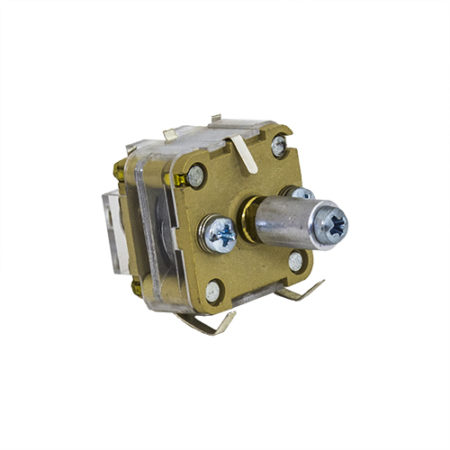
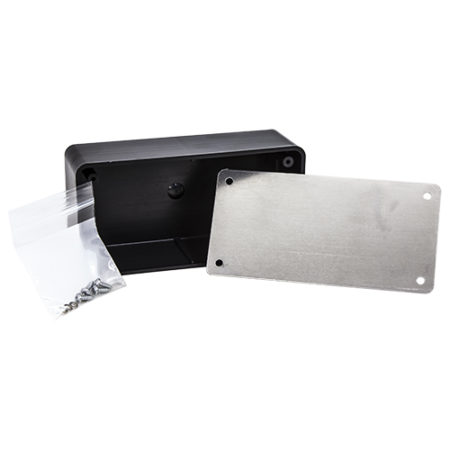
meter (optional, see text) RIT +/- 1KHz There are a number of superb single-band transceiver kits on the market now, at reasonable cost, and it is always a pleasure to see a new one -- especially if it adds something that the others lack. Such is the case with (W6EMT) Roy Gregson's NW30 from EMTECH. For those of you who might be confused, the series was originally developed as the NW8020 because the rigs were available on all bands from 80M through 20M; the new nomenclature is less confusing. THE ESSENTIAL NW30 The NW30 circuit is highly efficient and has a pretty low parts count compared to other transceivers in its class. Key components are a relatively standard NE602 front end, followed by a four pole crystal ladder filter, an MC1350 amplifier, another NE602 for the BFO oscillator, and an LM386 audio amplifier. The transmit mixer is an NE602 with a 2N2222 and a 2N2219 driving an SC1678 final amplifier. The optional variable bandwidth tuning feature is a direct modification to the crystal IF filter, and the optional active audio filter sits between the BFO oscillator and the audio amplifier -- this has the advantage of eliminating noise introduced by earlier stages, but of course does nothing for noise introduced in or by the LM386, which can be substantial at high gain levels. BUILDING THE NW30 The NW30 is a nice kit! The board is high-quality, with parts overlay and solder mask, and all of the components are new. The 25 page manual looks a bit daunting at first, but then you realize that a number of pages are taken up with tables of parts, test values, cabinet punching overlays, and so forth. Tools required for construction and alignment are standard, including a VOM or DVM, and a calibrated station receiver or transceiver. The manual says that an RF signal generator, an oscilloscope, a frequency counter and capacitance meter "would be nice." I agree they'd be nice, but they are luxuries this shack doesn't afford! In building a number of single band transceiver kis, I've found that construction methods fall into two general categories. On the one hand, you have Heathkit-style step-by-step instructions which go so far as to tell you the color code of each resistor as you install it. At the other extreme I've seen instructions like "Using the parts list and the overlay diagram, install all of the resistors," or even "Starting at one corner, install all of the components on the board!" These methods will work, of course, but if you end up with a kit that has a smoke leak it can be extremely difficult to find the problem. The EMTECH approach is modular construction and testing. First you wind the few toroids you will need, and the instructions make this easy. At that point I departed from the instructions and installed all of the IC sockets, because they are a lot easier to do with no other components on the board. Then, going back to the manual's construction sequence, I built and tested the VFO, keying circuit, audio amplifier, receiver, power meter, and finally the transmitter modules, in that order. The manual shows the relevant portion of the parts overlay, so you don't waste a lot of time looking for component locations. If you think that's trivial, I calculated on another kit that half the construction time was spent that way. Each stage is tested as it is completed, so if you encounter a problem you've already got the location narrowed down considerably. A number of test points are provided on the circuit board so that you can make sure each stage is performing correctly, but they can also be useful later when you are doing modifications. An interesting wrinkle in this regard is that the relative power output meter circuit is used to align the receiver stage by temporarily connecting its input to the audio output! And there is a VFO testpoint which you could (and I did) connect to a back-panel jack for a frequency meter. Oh, before I forget it -- the components for each module are in separate bags! The exception to this is the "band pack" which contains the components which are specific to the band you ordered, but the instructions tell you to look for those parts there rather than the module bag. You have a couple of decisions to make as you build the kit. Components are supplied for variable bandwidth tuning of the crystal filter, but this is optional. I can't imaging why anyone would choose to use the fixed bandwidth option, but there it is. The option consists of a varicap diode and resistor for each pole of the filter, and connection to an off-board pot. The relative power output meter circuit is optional -- takes only a moment to build, and of course it is useful in the receiver alignment as described above. That way you can add a meter later if you want to (a meter is not supplied with the enclosure kit, nor is the front panel punched for it). If you are building the optional audio filter, you have two choices of filter bandwidth, determined by two pairs of resistors.. The options are for 750Hz and 650Hz, and the appropriate resistors for either are supplied. Assuming everything checks out, alignment is very simple, consisting of final setting of the VFO range, setting the BFO and the RIT center, adjusting transmitter output and sidetone level and pitch, and a final peaking of the receiver. The enclosure kit is nice, and a bargain at $30.00, but if you don't elect to purchase it you will find very detailed instructions for mounting the transceiver in a Radio Shack 270-253 box, including drilling/punching templates. THE NW30 ON THE AIR The first thing you notice when you power up the NW30 is that the receiver is very sensitive and the audio output is huge, easily enough to drive an internal or external speaker. The price you pay for so much audio gain is that the volume adjustment is a bit sensitive -- if you are working a weak signal and then tune to a strong one, prepare for a headache! The VBT works very nicely, and I found that for routine operation I could just leave it set to mid-range. Filtering is sharp, and with the VBT narrowed down and the audio filter selected, a drifty signal could disappear outside the bandwidth pretty quickly, but the RIT brings it right back. (For the benefit of any beginners reading this -- you tune a drifting received signal with the RIT, not the main tuning dial or you will have two signals chasing each other around the band!) I found it necessary to re-visit the sidetone level adjustment, setting it near its minimum audible range, because the sidetone is amplified in the audio output circuit. QSK is smooth and quiet, as good as any I've used. Delay time is such that at about 20wpm you will be able to hear quite well between words as you send them. With the 30M version I found that maximum power out was around 7W, so at 5W (operating from a 13.8V supply) the transmitter is cruising at around 70% of "military power," which is important for two reasons. First, it extends the life of the final power transistor, and second, it gives it more tolerance for a less than perfectly matched load. The outpout power can be reduced to less than 100mW, and it looks to me as if an offboard power level pot could be installed in place of the existing trimmer. The NW30 is very stable, with no signs of drift, chirp, wow, flutter, or any other vices. Admittedly, the narrow bandspread on 30M would tend to minimize any such problems, but if you can't even detect them on 30M they are unlikely to be serious problems on the other bands. The documentation does suggest that if you have any problem with drift, it might be remedied by literally baking the rig in an oven at 130-140 degrees for an hour or two. I didn't need to do that with the NW30, but will probably find it useful for some other rig. The VFO dial markings are surprisingly accurate. Again, that may be something that is due to the narrow bandspread on 30M, but whatever the reason, I found I could easily resolve frequencies to a KHz by reading the dial. WRAPPING UP I've said it before, and I'll say it again. It's always a thrill when you make that first contact with a rig you built yourself. I was surprised and delighted when the NW30 gave me a contact on the very first call! Jim KB9LRP in Chicago gave me a 5/5/9 report and said "GUD SIG FER QRP HI" without my having sent anything but my callsign. EMTECH's done a very good job with this kit. I give it an unequivocal A+, and I'm looking forward to the Z-match antenna tuner and the 10M transceiver which are reported to be in development.
|
|
![]() ![]() ![]() ![]()
|
|
||||||||||||||
|
||||||||||||||||||||